
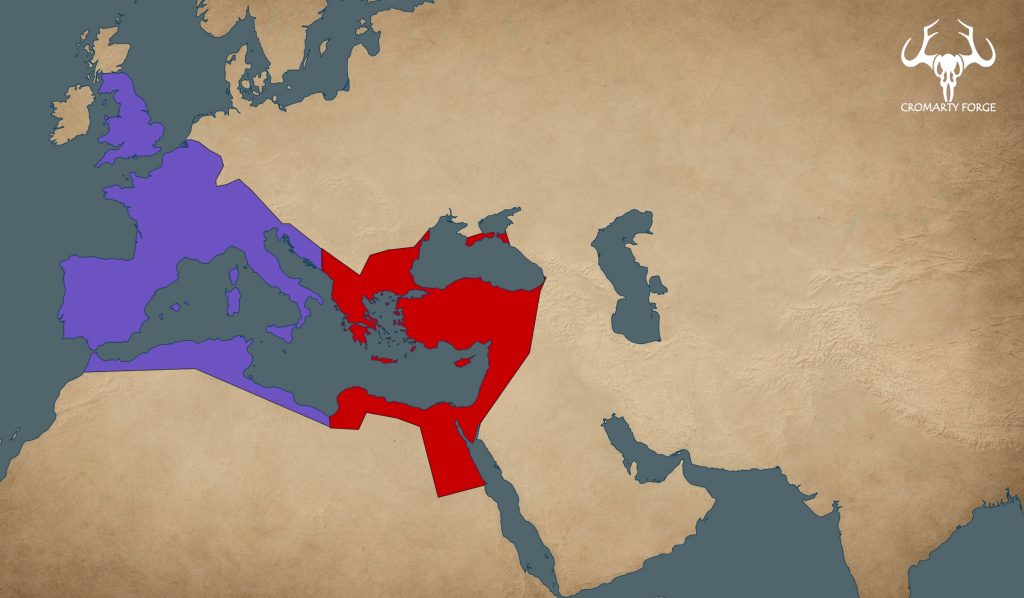
Late Imperial Rome
By the late 4th and 5th centuries CE, the Roman army – particularly the western roman army – had evolved into a fundamentally different force from the professional legions of Augustus’ era. Decades of civil war, barbarian incursions, and economic decline had eroded the centralised military system. In its place emerged a patchwork of regular troops, regional militias, and most notably, foederati — foreign tribal forces allied to Rome by treaty, often under their own leaders.
The traditional legions had been restructured and fragmented. Large, permanent legions gave way to smaller, more flexible units:
- The comitatenses, mobile field armies, served the emperor and senior generals.
- The limitanei, static frontier troops, garrisoned towns and forts along the limes (border zones).
These formations reflected a shift from offensive campaigns to defensive containment, as Rome struggled to hold its frontiers. Recruitment increasingly relied on non-Roman populations, and the empire could no longer enforce universal conscription across its provinces.
Horsemen and Hybrids: The Evolution of Roman Warfare
Foederati — including Visigoths, Franks, Burgundians, and Alans — became essential to Roman defence. In exchange for land, payments, and autonomy, they provided manpower and cavalry, often indistinguishable from Roman troops in both appearance and tactics. While pragmatic, this reliance blurred the lines between Roman and barbarian forces, eroding the army’s institutional identity.
Armour and equipment reflected this transition. The iconic lorica segmentata had long fallen out of use, replaced by chainmail (lorica hamata) and scale armour (lorica squamata). The gladius was supplanted by the longer spatha. Roman soldiers increasingly adopted barbarian styles — from cloaks and trousers to oval shields and eagle-headed sword grips — mirroring the cultural fusion within the ranks.
Cavalry now dominated the battlefield, often drawn from Sarmatian, Gothic, or Hunnic traditions. These horsemen provided mobility and shock power, compensating for the decline of disciplined heavy infantry. Roman warfare had become more fluid, less standardised, and more reliant on regional and ethnic contingents.
Despite its challenges, the Late Roman army could still be formidable. At the Battle of the Catalaunian Plains (451 CE), Roman forces under Flavius Aetius, alongside foederate allies, halted Attila the Hun — a rare moment of unity and resilience.
Yet the cracks were widening. Internal fragmentation, repeated invasions, and political instability gradually broke the Western army’s coherence. By 476 CE, when the last Western emperor Romulus Augustulus was deposed, the army was largely composed of non-Roman soldiers serving former imperial generals turned barbarian kings. The Western Roman military tradition had not vanished — but it had been transformed beyond recognition.
Late Imperial Roman 10mm STL Files
The army list here is intended to represent the Late Imperial Romans from ca. 400 – 460CE
Where possible I have sculpted models to be self supporting. I add supports during my sculpting process rather than afterward. The integration of supports into design allows me to reduce the number of supports needed, and to position them more favourably. My supports need to be removed with clippers or a scalpel. All models requiring supports are also supplied in an unsupported format.
Some infantry models are supplied strip mounted. Strip mounted models are supplied on strips intended for use on 40mm wide bases. Where models are strip mounted individually mounted models are also supplied.
-
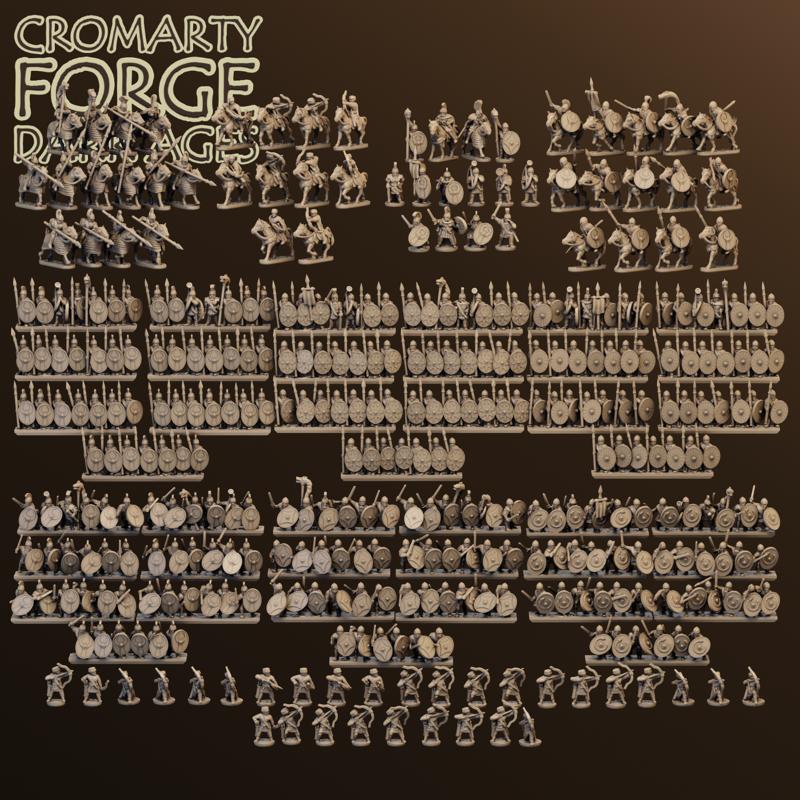
10mm Late Imperial Roman Army
£40.00 -
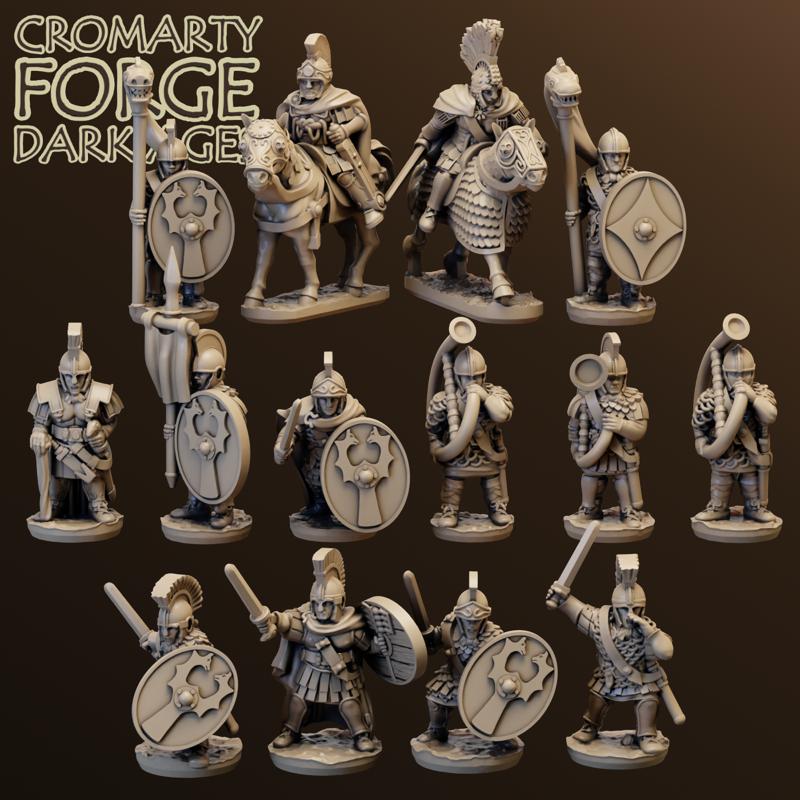
10mm Late Imperial Roman Command
£4.00 -
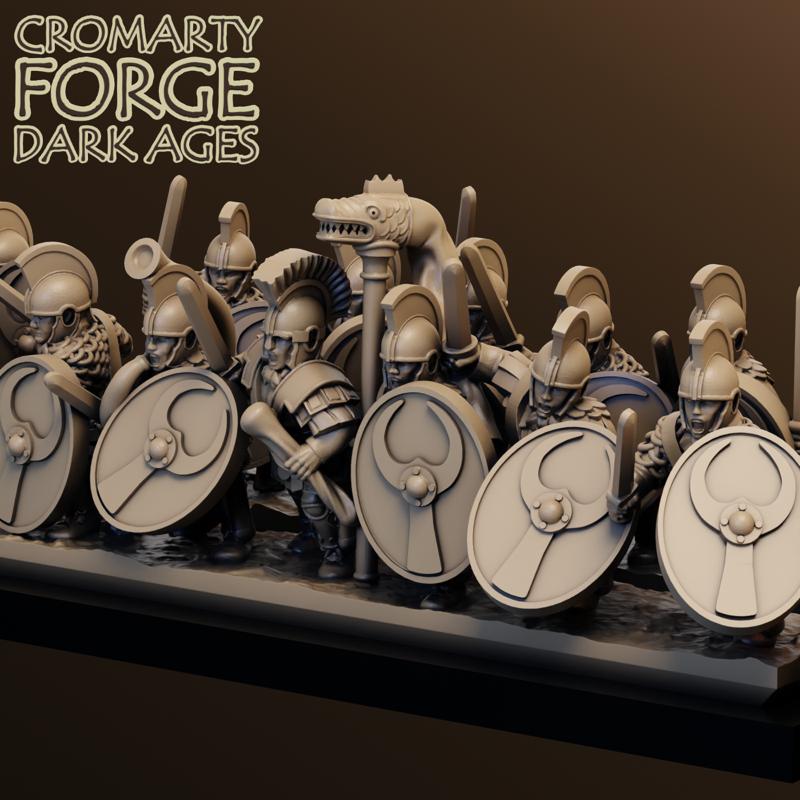
10mm Late Imperial Roman Palatina Attacking
£6.00 -
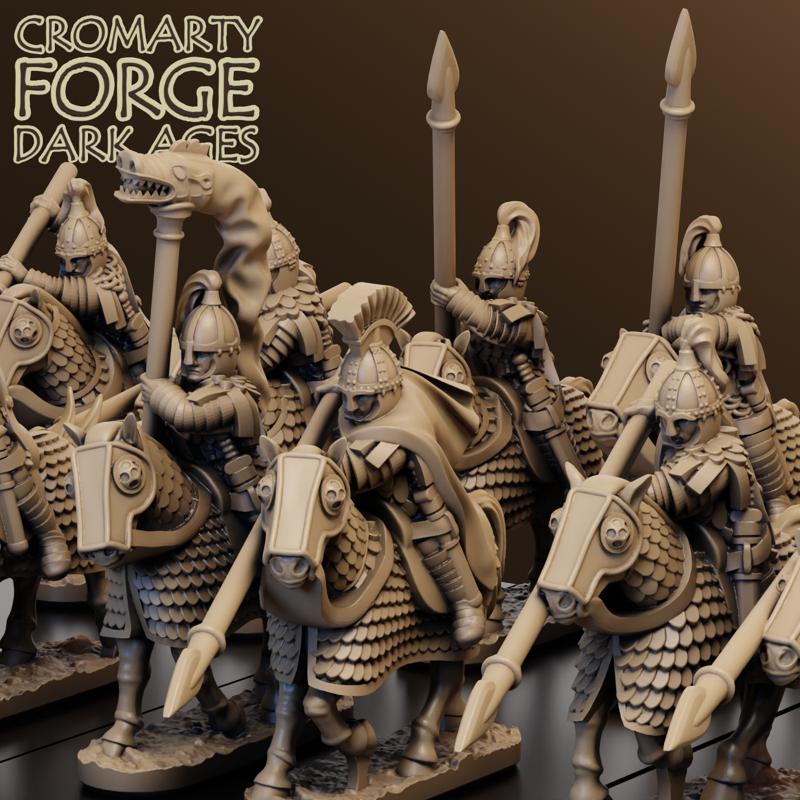
10mm Late Imperial Roman Cataphracts
£6.00 -
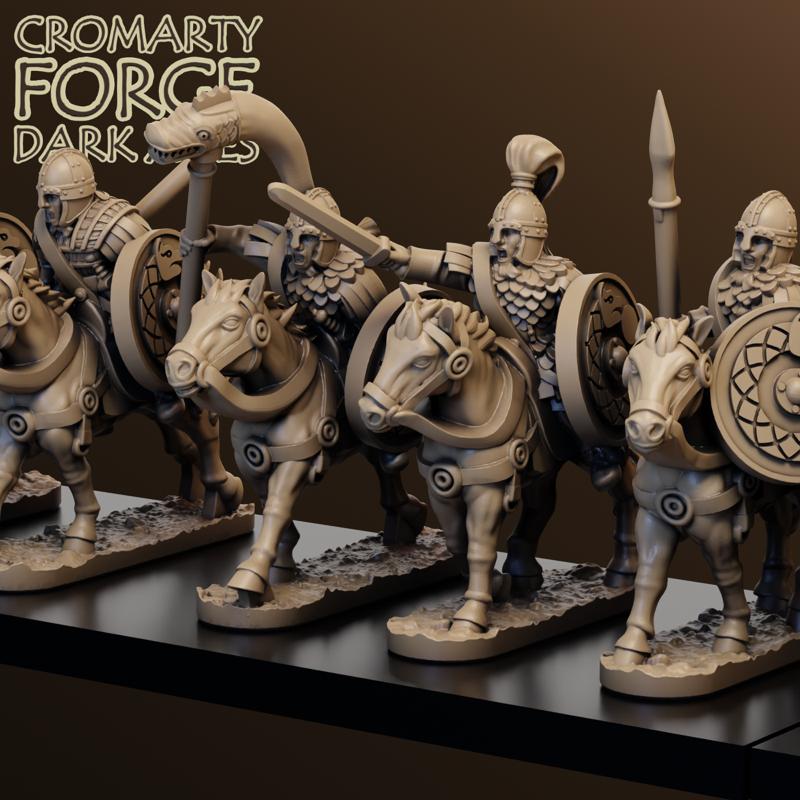
10mm Late Imperial Roman Equites
£6.00 -
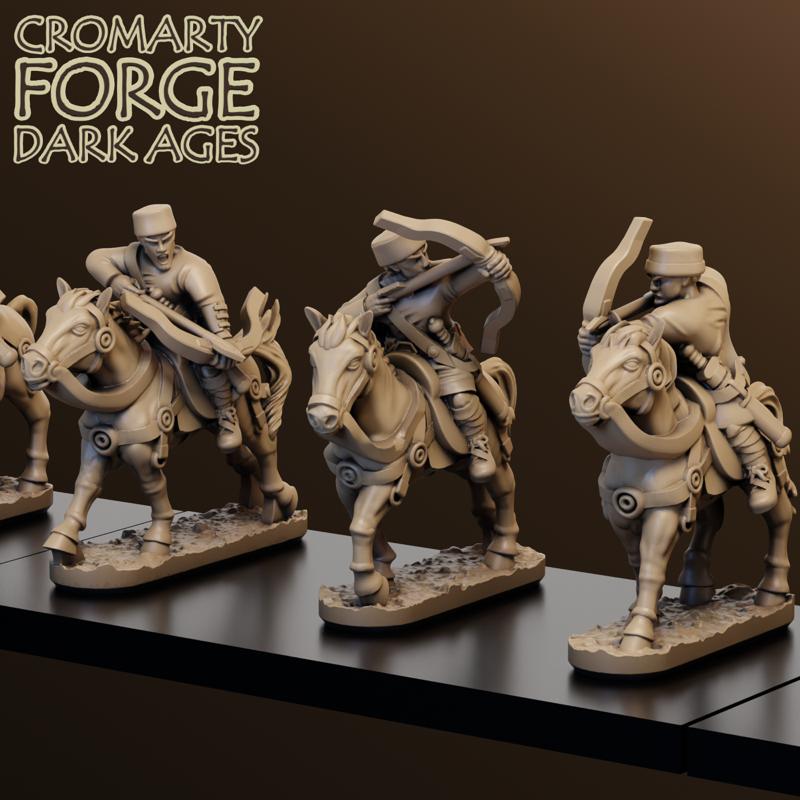
10mm Late Imperial Roman Equites sagittarii
£5.00 -
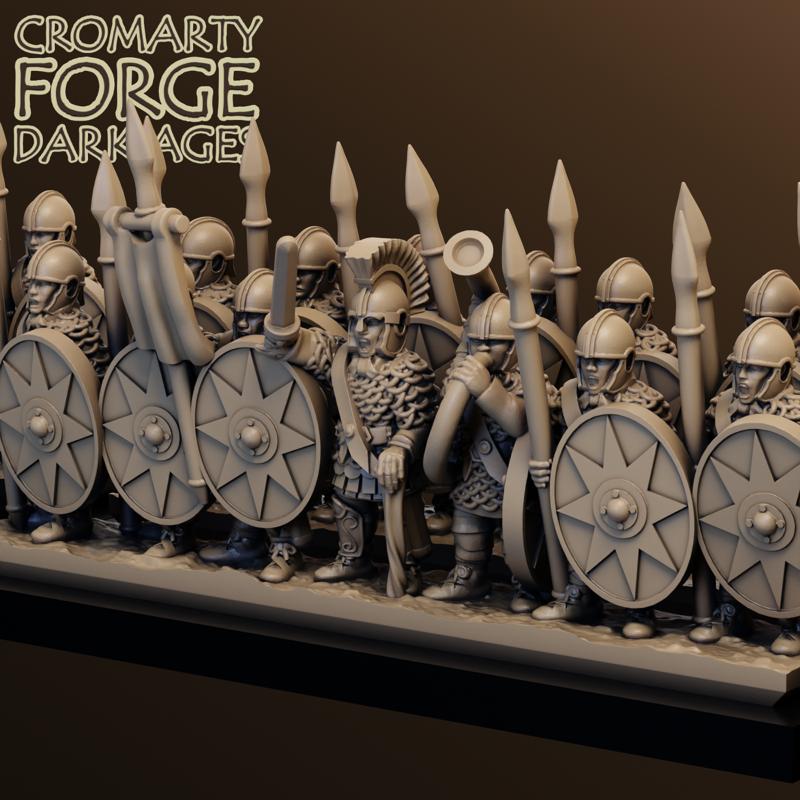
10mm Late Imperial Roman Legionaries
£6.00 -
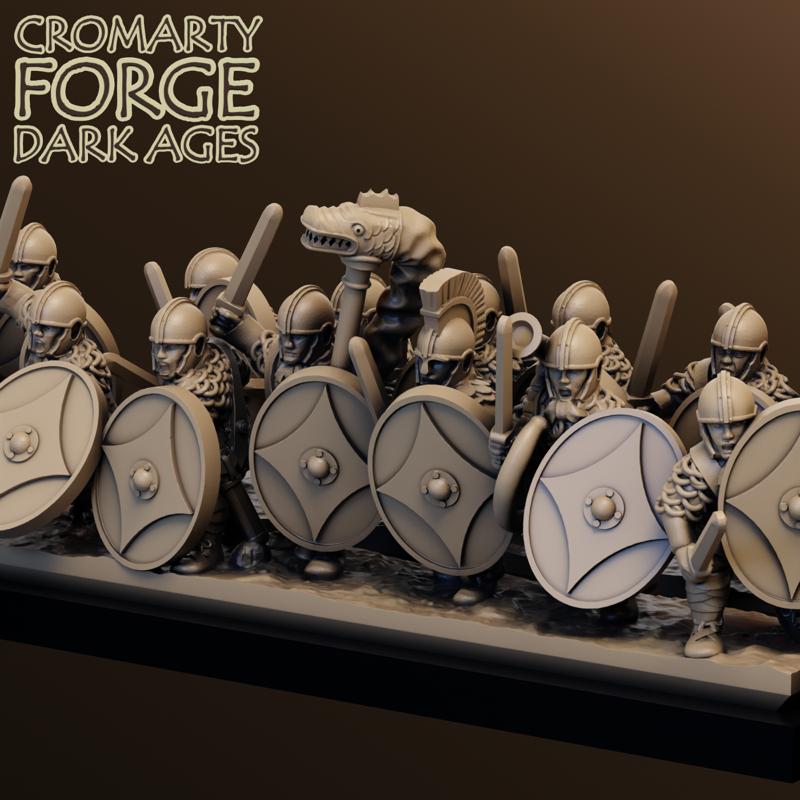
10mm Late Imperial Roman Legionaries Attacking
£6.00 -
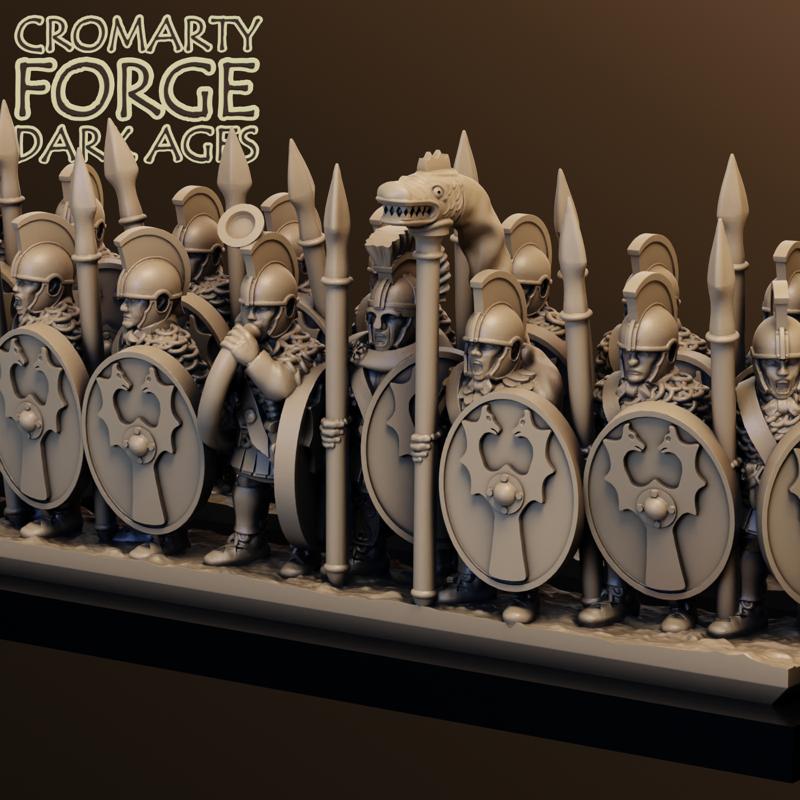
10mm Late Imperial Roman Palatine
£6.00 -
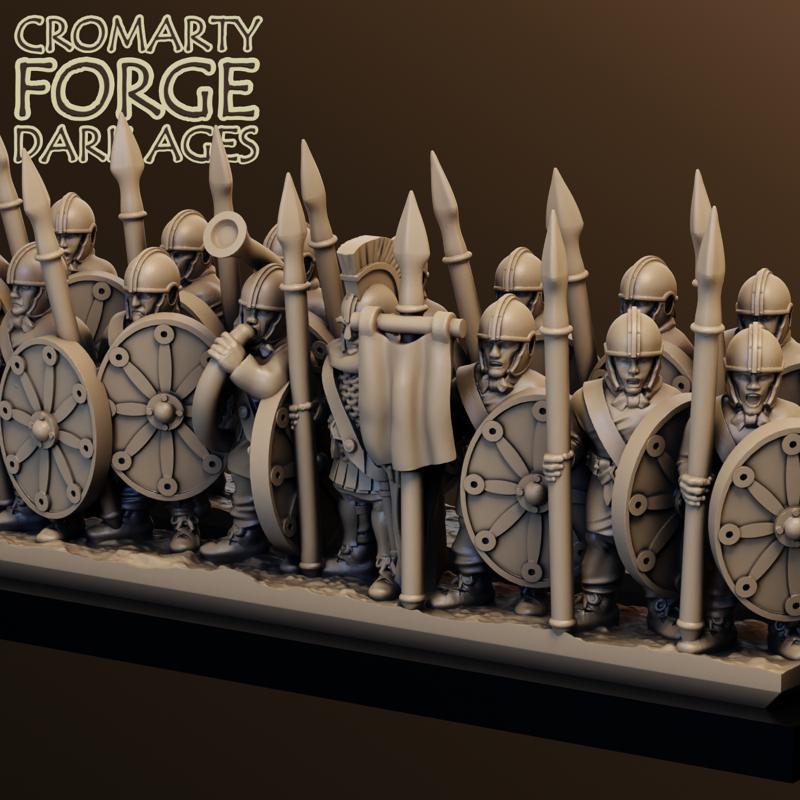
10mm Late Imperial Roman Unarmored Infantry
£6.00 -
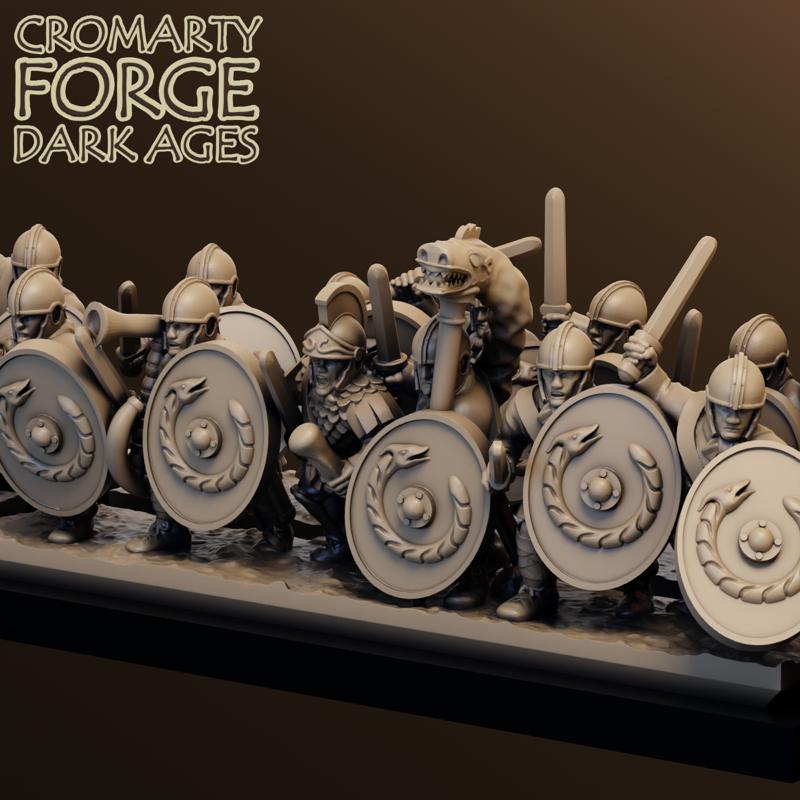
10mm Late Imperial Roman Unarmored Infantry Attacking
£6.00 -
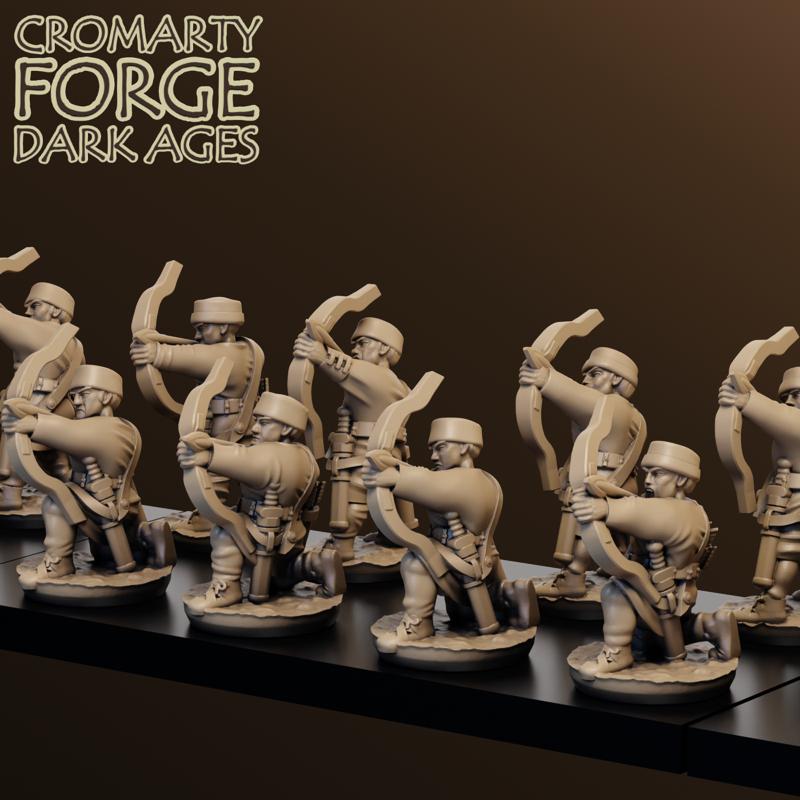
10mm Late Imperial Roman Archers
£5.00
Map credits:
Basemap and geographic features from Natural Earth (naturalearthdata.com). Map built in QGIS.
Historical overlays digitised by the author from historical sources for educational and illustrative use.